WAN & WAN Technology
WAN Technology (Wide Area Network) is the network that connects the geographical far areas. It can be used for a client to connect to the corporate network, connections between the branch offices of a company and similar wide area connections etc. There are other smaller network types like
MAN,
LAN and
PAN. We will talk about these technologies in the other lessons.
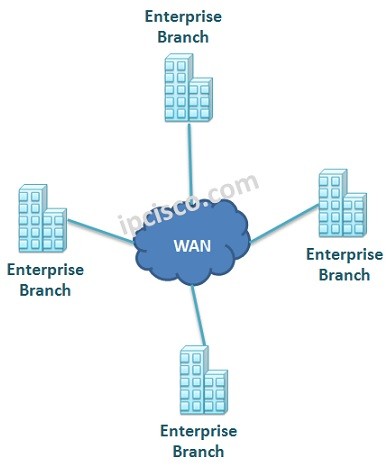
As a reminder,
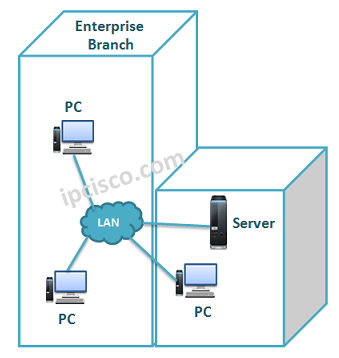
Local Area Network (LAN) is the smaller network. And we can simply say that, each Enterprise Branch has one more
Local Area Networks (LAN).
 WAN Technology
 and the related protocols operates at the
bottom two layer (Physical and Data-Link) of OSI Model. The Physical Layer determines the connections, The Data-Link Layer provides the Encapsulated transmission. The protocols used in Data-Link for WAN are HDLC, PPP,Frame-Relay, ATM etc. We will talke about these protocols detailly in other lessons.
Serial WAN Communication
Serial WAN communication is divided into two group. These are :
- Syncronous Communication
- Asyncronous Communication
Syncronous Communication is the communication that uses clocks (timing). Sender and receiver are syncronized with this clock. It is faster and less overheaded transfer method. A block of characters are sent at a time.
Asynronous Communication are the communication that do not use timing. Sender and Receiver is not synronized. One character is sent at a time.
Serial interfaces can be
DTE (Data Terminal Equipment) or
DCE (Data Communications Equipment).
DCE provides clocking and converts user data into the service provider’s format. CSU/DSU is an exmple of DCE.
DTE needs a DCE for clocking.
WAN Protocols
There are several
WAN Protocols that are used between different locations of different networks. These protocols are:
HDLC (High-Level Data Link Control) is a layer 2 WAN Encapsulation Protocol that is used on syncronous data links. It is the simplest WAN Protocol that can connect your remote offices over leased lines. It has both industry standard and Cisco proprietary version.
PPP (Point to Point Protocol) is also a WAN Encapsulation Protocol that is based on HDLC but we can say that PPP is the enhanced version of HDLC. There are many additional features in PPP like Authentication, Multilink support, Error Detection, Quality Check.
Frame Relay is another L2 Protocol. It is based on X.25 and provide Virtual Circuit based conenctions. Frame Relay was popular before, but nowadays it is rarely used.
ATM (Asyncronous Transfer Mode) is a cell based Layer 2 WAN Protocol. It is used with hicgh speed transmission media like T3,E3 and SONET.
In other lessons, we will also talk about these WAN Protocols more.
WAN Service Types
WANs (Wide Area Network) has three common different types of services. These WAN Services are:
- Leased Lines
- Circuit-Switched Network
- Packet-Swicthed Network
These WAN Services provide different advantages to the customer. Let’s cehck these WAN service types one by one.
[sc name=”ContentRMessage”]