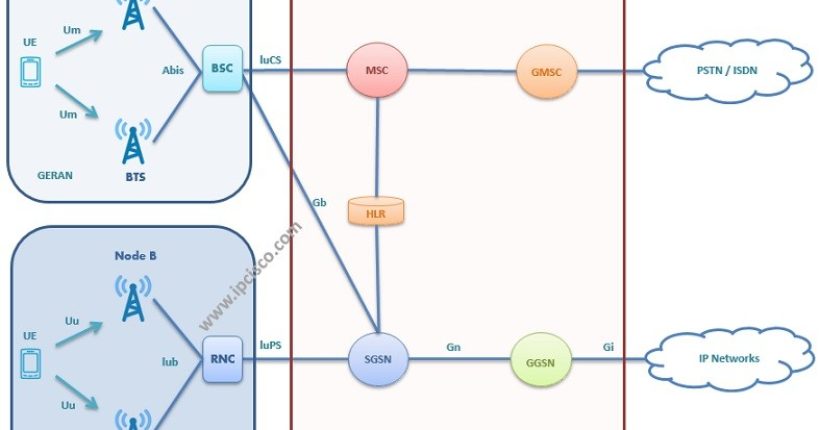

The evolution of the 2G technology to LTE technology is in three types:

- Technical evolution : The new network elements are developed with new technology
- Network Evolution : General functionality of network will change
- Service Evolution : Demand generated by the end user will increase
GSM (Global System for Mobile Communication)
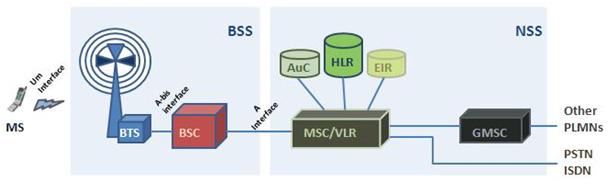
GSM is an ETSI standard to describe the second generation(2G) digital cellular networks. The original name was “Groupe Spécial Mobile”. Uses circuit switched network. With its evolution and adding packet switched networks, new generation technologies GPRS, EDGE, UMTS and at last LTE is introduced. The basic GSM architecture is below. Here, as you can see GSM architecture is divided 4 subsystems:- Mobile Station (MS)
- Base station Subsystem (BSS) : Radio path control
- Network Subsystem (NSS) : Call control
- Network Management Subsystem (NMS) : Operation and maintenance